Welcome Message...

Welcome to Impudia Games official Blog!

We invite you to explore the minds of the creators when developing the games, on your left you can find a series of projects, click on any of them to look at the production blog. Also there is a chance to read about interesting thoughts and visit websites of some talented developers.

We invite you to check out these games on the android market:

Doodle Pirate

Wings Academy


Special Announcement Coming Soon!

We are proud to confirm that we have been working on a very special project for Facebook. This project seeks to break the barrier between education and entertainment. Please check back with us soon to experience our new Social Game.


New Super Mario Million Coins Achievement (SPOILER)

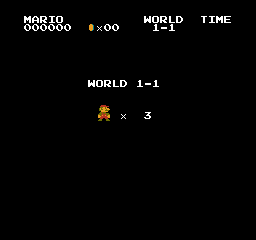
Anyone that knows me, knows that I am a die hard Mario fan. I downloaded the new Mario game at midnight release on my 3ds.

Also everyone that knows me, knows that I am a compulsive gambler. In this case I wasn't really gambling but there was a challenge to reach 1 million coins.

At first it seemed like a great task to beat, but I was able to find a good place to make a lot of coins and in a fast time.

What I like about the game is that there are probably a million fast ways to get to the million coins, I just happened to stumble upon one of them.

In total I spent over 20 hrs playing the game to reach the goal, but in reality, I made over 750K in the last 8 or 9 hr.

Here are just a couple of screenshots, I will not reveal much more that this screens.

By the way, my magic level was 2-4.... my record on that level is over 5700 ( I got to have over 1000 lives at one point, nintendo doesn't show 1000, it shows a crown plus the last two digits).

Also my record for coin rush is at 13k  with levels 2-4, 1-5 and 2-minicastle

Now I wonder who else has gotten this record......

I Achieved it at 7:00 am  et on monday..


Career Game: Game Development.


As I have been talking on Living on a Gamified World? and the Khan Academy posts, there is a clear advantage to using technology as an educational tool. Khan academy has demonstrated the importance of self paced and self assessed education, while books like the Element by Sir Ken Robinson have talked about the importance of being who you want to be.

As I have been reading some comments I have realized that it is time to stop talking about what should be done and start developing some games. As game development has taught me, you can never predict all the possible outcomes or obstacles you will encounter, you must make a plan, execute it and be prepared to overcome obstacles that will come your way.


I realize that I don't have either the funding or the team to develop these sort of games, but I will start with what I can do, and hopefully someone else will join me along the way.


As I have been talking about games as tools to inspire people to work on what they love, I have decided to make an educational game that is about becoming a successful game developer.


If anyone else is interested on helping, welcome aboard

New Graphics


Check out the revamped graphics for the game, the map looks really awesome, and some elements were also redesign to stand out more. All art was drawn by Hernando Bahamon

Discussions on Khan Academy

Khan Academy seems like such a big subject that it is very hard to limit thoughts inside of a comment box, so here is a response to Prof. Noschese comment Also to post by Ian Schreiber
and Post by Jason Rosoff


Now let me start with this quote from Noschese's blog:

"As my students would say, “Don’t hate the player, hate the game.” Khan Academy is merely a player. We need to change the game."

I couldn't agree more with this statement. I see Khan Academy as part of the group that are trying to solve the problem of education.


In his comment, he mentioned the fact that there is a big chance that kids wouldn't be motivated by Badges and Achievements for very long, and I do agree with this statement, but the problem is that achievements shouldn't be the only motivator. Here is where we can take a lesson from the game development industry, what makes achievements so successful?

Achievements provide a quick goal and the combination of achievements give you an overall idea on how much progress you have made. There are two very important "Motivational" Tools that come with achievements:

1) A student will be able to "Quantify" his learning, this sense of progressing through a task is a big motivator, especially if you see that you progress rapidly, currently you could argue that school levels are marks of progress, but those come once a year, or more!

2)Competition, is the most motivating aspect behind passion, and with achievements you are able to get students competing amongst each other to gather as much points as possible or gather some achievements that others might not be able to.


So Achievements are not good to be the only motivators in school, but they are definitely some very valuable tools that we can use for motivation.


Now as I have mentioned before here I am very happy with Khan Academy, I see great potential, but there are definitely various aspects I still see as question marks. I addressed some of them on the post linked above, but all this Khan Academy has got me thinking...... and I noticed Ian mentioning some of this on his post.

To help me illustrate my thought, here is a sound clip from a masterpiece: Jurassic Park


"Yeah but your scientists were so preoccupied with whether or not they could, they didn't stop to think if they should. "


The Khan Academy is providing great videos, technology and evaluation that supports the current education system, and a lot of the discussion being mentioned on my blogs is about how to use games to improve the engagement of the students.

But, are we making a mistake here?
are we looking to gamification to attract kids to the current system, when we should be concentrating on ways to make education not only fun but valuable for a kids future? I think there is no better way to understand this than to hear to Sir Ken Robinson


I talk a little about the way we should use technology to help create a more beneficial education system here.


I couldn't avoid sharing this wonderful video about the Independent Project as shown to me by Noschese:


I think it is wonderful to see what these kids are doing, it really shows how passion can lead the way to many successes. There is nothing better than seeking knowledge. When you are interested in something you want to know more about how it works, no matter what you have to do to learn it.

I noticed a comment on the video and maybe on one of the blogs, there seems to be some resistance to technology in education, and I just wanted to give three main reasons why technology is not only good, but a must have for education:

1)Adaptability: With technology, a students knowledge can be measured and the computer can adapt the difficulty to always challenge all students, but at the same time give them a valid chance to succeed.

2) Handicapped Children. There is a lot of material in education, but unfortunately most of it is not enabled for Handicapped children. With technology, it can communicate information in many different manners, improving the chances of handicapped children learning

3) Poverty. Perhaps one of the most Disgusting realities is that poor children are not given the same education as privileged ones. With technology becoming cheaper every day, we can soon begin to distribute the same educational content to ALL children around the world. Thumbs up for one laptop per child.


The big question would be how to grade this type of education, dedication and motivation? maybe, what do you think?


In conclusion I hope I communicated my thoughts well. I am very happy to have found such an understanding, respectful and critical group of people. If there is one thing I know, is that the only way education is going to change is with teamwork. One person can't have all the answers.

Wings Academy

This game has been around me for many years, it has gone through many transformations, this latest version includes very promising collaborations. Perhaps what I am most excited about this game is that it is a project developed 100% online, I have never met in person with any of the developers of the game, yet we collaborated to make a polished game.

The game also contains a cool feature were you get to choose a control type, you can either choose to use the Accelerometer or Tap the screen to move the Plane


Don't forget to visit the app on the android market

Doodle Pirate out now!

Doodle Pirate is now on The android Market, development for other consoles is being scheduled at the time.


Meet Captain Doodle! The most feared pirate in history! At least he thinks he is.........

Jump aboard his ship and enter his imagination, Collect Treasures and Jewels while avoiding Monsters and high tides.

The development process of this game will be revealed soon, you will be surprised how much this game has formed since the beginning.

Thank you for visiting the Blog and make sure to check out the app on the Android Market


Khan Academy (from a Designer Point of View)

This post is a response to the post made by Jason Rosoff talking about the Khan Academy.

Hello Jason, first of all let me say that I really appreciate the job everyone is doing at Kahn Academy, I can obviously see that Mr. Sal Kahn is not only an amazing person, but he is wise when choosing the team he works with. Your passion and commitment really shows. Having said that, let's get to some constructive discussions,

Just a warning, I am not saying at any point things would be better if done the way I say, all suggestions and Comments I make on regards to the Academy are just opinions from my Design Point of view, Hopefully with a little back and forth brainstorming we can come up with great solutions.

The achivement system has become a game design element commonly used to help deal with replayability, it also helps motivate the user because they realize that they are being succesful. I think this system is very well implementeed at the Academy, I specially like the different types of awards, although I am not 100% sure about the amount of awards that are given out. basically each module gives out 2 achivements (for completing, and for answering fast). This could be ok, I'm just thinking that maybe they will lose value to the students, and if they do then kids might not be motivated by them, which would defeat their purpose.


The 10 streak system has definitely some positive aspects, and a couple of question marks as well. On the bright side, with a 10 streak you can notice how students are handling adversity, you can measure their effort. Some might just quit after failing a couple, while others might watch some videos and keep trying until they succeed. Another positive aspect is that with 10 questions various aspects can be analyzed, I'm not sure if there is any AI behind this or if it is random but for example when learning multiplication, with a series of questions you can test if the student understands aspects like multiplying by 0, by 10, 5, 100. So instead of the kid learning a couple of tables, with this variety they will test different aspects.

As you mentioned, loosing with a streak of 9 can be pretty frustrating, especially if a student has tryied for hours and maybe it was a slight misstype. Here is where my Game Design Lightbulb starts blinking, as far as the streak goes, maybe the doubt you have is because of the fact that there is no forgiveness to the user, mistakes can happen for many reasons, and the last thing you want is to make a mistake and completely ruin everything you have been working on, this probably the best explanation for the 3 lives system implemented by many games.


By adding a bit of forgiveness you let the players make a mistake, then if they make more than one they wont blame the system but themselves and this will motivate them to improve. With the no mistakes policy it could be seen as the systems fault. But with statistics this should be pretty nice to prove (I am jealous because with all that data it must be amazing seeing all the different patters and then seeing how your work affects them).


Another big question mark I see with this system is the assumption that when you answer 10 questions on a row you are then proficient on that module. Looking at one of the links you posted I noticed this card:

As you can see, this student passed a module but then struggled with the review, I'm not sure how long there is between each review, but this is definitely something to keep a close eye on. There is already a lot of research done by the Academy to determine what modules need to be learned before working on a particular module, so using that knowledge I would suggest a program that it is not a multiple choice answer or open answer, but an interactive module that lets you do step by step(sort of like the hint does it), then by allowing the kid show their work then it is easy to detect the reason why an answer was wrong, and then this would help detect gaps quicker. But this is easier said than done, so perhaps a less effective by easier test would be to create an "alert" system, so if the kid gets a question wrong, all the modules that are prerequisites get "alerted" then if a module gets "alerted" some 5 times then you can ask the student to do an emergency session of that particular module.

When you say kids are trying to game the game do you mean they are trying to find loopholes?


Now I'm going to throw out a bunch of ideas and I would love to hear your opinion on them:

1) Goals: Looking at the cards I noticed that the teacher was asking students to set their goals for the week. This sounds like a great idea, perhaps I wouldn't make it a mandatory weekly goal, let the students choose their goal and timetable but there are three great benefits of goals. first they motivate the player to want to "Study" longer hours, secondly, The software can track effort and confidence by looking at the goals being set by the student. and then there is also the fact that the teacher will have even another statistic that will quickly detect weak points on a kids knowledge.

2) Challenges: these are a bit different from the current set of challenges, these challenges would mostly be determined with the help of AI and statistics, and basically they would be challenging a student to accomplish a number of modules in order to receive a prize. students that are currently easily progressing through the levels would get a larger amount of levels needed to complete the challenge. This would be designed to motivate all students equally. By making shorter goals, the struggling kid would be able to succeed more often, thus getting more motivated.

3) Collaboration: There is nothing more motivating than competing with or against a friend. This component could be implemented on special challenges that required teams of students to compete against the clock to pass a certain amount of modules.


4) Class Awards: Again competition is a great motivator, so perhaps outputting to the teacher stats like the student that spent the most time watching videos, the one that answered the most questions, the student that gained the highest amount of modules. All these stats would not only motivate students to get them but at the same time it would allow for students with all different skill levels to win.

5) Personalization: The sims is one of the biggest successes of personalization, with the ability to create your own character many people get emotionally attached to their virtual player. Also this Avatar can be utilized at different points of the childrens progress.


6) Unlocks: unlockables are perhaps on of the most satisfying elements of games. When people get this "secret" content they feel really special. But obviously locking educational modules is not a good idea, all content needs to be worldly available, so here is where the use of avatars can help with the unlocks, perhaps students can get gear or something cool for their avatars only when they reach locked areas.

7) The last of my observations (for now) is that as of now there is a monotonus flow of the game. All modules have a video and a set of questions, but after doing 15 modules someone might not be motivated to keep playing, but there could be a simple game or activity that get's unlocked after playing a set amount of modules, this would create a resting period for the user. These stoppages are really helpful to keep away from constant challenge. An example of this is the surfing level on Mario Galaxy. This was simply a race, not too many stars were awarded but it gave the player a break from entering galaxies and collecting a bunch of stars.


Well, I hope you found this post interestingly enough to keep the discussion rolling. But I do want to say that if there is anything you ever need as far as testing, prototyping, commenting, or any other thing, you can count on me, I trully believe that the Khan Academy will help millions of students worldwide, and I want to extend my hard work and passion to help as much as possible.

thanks for reading

Living on a Gamified World?

This post is in response to a Blog post by Sande Chen asking about one of the latest buzzwords in the industry: "Gamification" - you can check her post here: "Sande On Gamification"

I agree that most people think of achievements when they hear gamification, and I do agree that these little achievements will help many people to organize and learn about things that are good for them and the community, anywhere from getting kids to eat vegetables to reducing water over usage, awarding points and rewards will really help build these core behaviors.


Now the term Gamification is the million dollar question, because up to now it seems something an app could handle, so it would be called Applification or something like that.
I've been thinking, and perhaps there are two game elements missing from this, a clear big end goal and enemies. This reminds me of the Ted Talk by Jane McGonigal , she talks about making massive online games to get people working on a big goal like low fuel usage, this would resemble something closer to gamification in my opinion, but to be honest there is still some doubt on my mind. One belief I have that I really think is true is that people will not reach their potential if they are not emotionally involved with what they are doing. So some world wide problems might not motivate many people to play.

The only goal of gamification is to help society improve. So I would suggest that instead of looking at games to solve big problems in the world, we turn to games to help each and every human reach their goals and dreams. Thus making a better world.


Perhaps the closest example to help you visualize what I'm thinking it would be something like second life. But much more elaborate and with real life opportunities, with careers people can pursue, sort of like warcraft, but with the difference that you are given real tasks and you are evaluated on performance.

So for example, Let's say I want to be a police officer, and I'm 10, going out of my house at 1 am to fight crime is not a possibility, but with the use of games, there can be events like car chases, robberies and more, could be either simulated or user triggered. And as I play the game I gain badges or ranks that allow me to play or do different things in the game, and by the time I'm 18 I would have already understood many of the challenges and difficulties of this career, helping me make my decision on what career to choose. This career changing decisions are easier to make in game when young than during midlife chaos.

This sort of reminds me of Wannado City, a wonderful place where kids get to run around in a kid-only "city", and they are given jobs they choose, like being chefs, police officers, scientists and many others.


In conclusion, Gamification should promote and encourage people to be who they want to be, to follow their dreams, It should help them understand what they say they want, and track their experience that will later be rewarded by real life jobs. It is a big dream, it would definitely take a world wide collaboration to accomplish it, but that didn't stop wikipedia from being the top encyclopedia on earth.

Thanks for reading and I would love to hear opinions, There is nothing more productive that teamwork.

Khan Academy


The development of successful educational games that can help millions of students around the world enjoy learning has been my hope and dream for at least 8 years now. I have always known that technology would bring so many advantages to education and that it is inevitable that this education revolution will come, well today I am glad to inform you that this revolution is here, the name: Khan Academy.

If you are:
a) A game developer, or
b) A person that has ever struggled with a subject at school, or
c) A human being

then I ask for the next 10 min to show you the future.


Let's start with a quick little video from the mastermind himself, Sal Kahn


So what is Kahn Academy?
KhanAcademy.org is an online system that provides thousands of short 10 min videos about almost any subject you can think of, and when I say think of I mean it. Anywhere from basic math, to calculus to the French Revolution you can sit down and learn about them thanks to the knowledge of Mr. Sal Kahn.


How would this help Education?
Khan has set up a wonderful system called the Knowledge Map as seen below:

As you can see there are a bunch of little squares, each square is a valuable piece of knowledge, At the very top you find your first task, Basic Addition (1+1, 2+3), then once you have learned that concept and successfully mastered it by answering questions you "Unlock" new subjects that build upon what you just succeeded.

It is obvious that to learn algebra you must already know how to add, multiply, divide and subtract, but the problem with today's education is that kids are forced to follow a strict curriculum, so if they don't learn something, then they are left behind. With this system you practice a subject until you become proficient and confident with it.
This not only allows you to learn at your own pace but it provides you with a completely solid knowledge base.

How do I know I am proficient at a subject?

After watching the video of that section you move on to the practice screen, here you will be asked questions about what you just learned, and it will track your answers. In order for you to be considered proficient on a subject you must answer 10 questions correctly in a row. There are no timers and no limit to how many problems you can take. The idea here is that you work at your own pace, you try and answer some questions, if you struggle, then perhaps go back and re-watch the lesson video. Here is a screenshot of the Practice section:

As you may have noticed there are several cool features here, below the tittle of the module there are the links to the videos that help you if you struggle with this practice, there is also the streak counter, once this fills up you are given a proficiency badge and you can move on.
But perhaps the coolest feature is the hint button, this will help guide you by showing you how to solve the problem, not just give you the answer but show you all the steps.


Why do you call this an Educational Game?

The starting point of this project was just a series of videos to help tutor kids on several subjects, therefore no interactivity was required, but as years go by, we can certainly notice that Mr.Khan has been attempting to "Gamify" the system. From the Knowledge tree you can see some of the things he is attempting, giving away badges for succesfully becoming profecient at a subject, awarding badges (Achivements) for answering many questions in a row, or with a really quick response.

These are the set of badges I have earned as of this moment:


I should definitely also mention the statistics system, Thanks to computer algorithms and databases, the academy will store all your answers, your complete progress and it will help you realize topics you might be struggling with here is an example of a student taken from one of the videos:

Isn't this wonderful? look at that much data, as a teacher, parent or even yourself, this type of statistics can really motivate you to keep learning, look at how this student answered several questions incorrectly, then watched some videos, and kept trying until he achieved the goal.

Now between stats, Databases, Achievement Systems and Computer Algorithms to help solve problems, there is definitely some "Gamification" going on, but here is where I put on my Game Developer Hat (it is actually always on) and think that as a game development community we should step up and provide as much suggestions as possible, We know how to entertain, attract and engage our users, what game elements can we add to this system to make it even more awesome?

I am anxiously awaiting the replies to this ultimate Game Design Challenge.


Conclusions

This is by far the most excited I have been about the future of education in my life. I can feel the potential of this. Perhaps the one thing that gives me most confidence is that this is free, a man has spent 5 years of his life doing this for the world, there has to be some great value there.
Now I do have some questions about the educational effectiveness of this program, that I guess only time and statistics will help us out, but here they are:

1) How good is the retention level, what would happen if all of the sudden there where surprise practice sessions on old topics, would students be as proficient? There is the chance that most of the things are getting stuck on short term memory so passing the subjects became a memory challenge (but I doubt this is true)

2 ) How do you integrate this to a classroom, can you just base your curriculum on this system?

3) How to motivate students to join this system?


Thank you very much for your time, I really hope that you are as excited as I am for the future of education, but I would ask for one thing, never take someones word for granted, check out the Khan academy, try a couple of courses yourself, ask you kids, brothers, parents to try it, let's see how effective this can be.

Small Update

Since the last time I wrote there have been several changes made, The main thing you might notice are the colors and size of the game. but if you look closely there are small details that add a lot to the game experience overall.

First off, there is the Sound indicator at the bottom. here you can toggle the music on/off. If there is one thing I hate is having a game making noise when I don't want it to. so this button will help solve that issue.

Secondly you notice the ball looks weird and there is a small blue circle. The blue circle is the cursor, and its main functionality is to tell you if you are able to shoot or not. when you aim at an angle that is not permitted this cursor turns red. The reason why the ball looks stretched is because now you get this little preview of the direction the ball is going to take, this really helps the aiming. There might be a possibility of me adding the gravity effect to the preview, that way it is even more helpful.

Third is a small detail that might not seem different, and that is the record. When I took this screenshot I had just ran the program, but this score was there, the reason it was there is because I have added the functionality for the game to store values in a Shared Object. this means that the record will always appear there every time I play. This feature is going to take this game to the next level. now I can add unlocks, and keep track of any data I want.

The last thing is the menu song. Now you won't be greeted by a boring silent menu.

There is a small business trip coming ahead, so there might be a one or two day delay on the next update.

Not quite attractive yet

The main game functionality is working, and that is the most important part of a game, but I feel that visually the game is not too attractive, the cluttered menus and HUD make it a bit uncomfortable to play.

At the same time there are some small details that I feel could make the game easier to play and understand, for example adding a feature that lets the player know where he can jump, many times when stuck to the edge you might feel that you can jump up, but do to the fact that you are on a side wall, you can't jump straight up, but that is something that seems more like a bug than a mechanic, so by adding a way for the player to know what angles he can jump to I feel that it would greatly add to the game. Also the ball itself needs to look cooler, right now it is extremely weird how it just stops and lays there with out really grabbing.

Below is a list of other things I want to fix:
-Add sounds to the buttons (make a noise when you hover over them).
-Add a clickable link to the blog, this way people can see all the process of making the game.
-Add music to the main menu
-Reorganize the menus to fit a larger screen
-Add mute button
-Let people use buttons from the game to restart a level or play a different one.
-Make HUD more interesting
-Add a cookie so that record scores can be kept
-Record more data like All time points gained and blocks hit.
-Add Performance Awards (ex: over 70 blocks hit in one level, under 15 seconds to complete, 17000 or more points in a level, 1,000,000 career points).


Well, it seems like a long list, but I'm sure all these little details are the difference between a fun game and an addicting game.

Milestone Complete

It has now been 46 hours since I got the task, and here is the working version of this fun game, I was lucky to find a great song for the game using freeplaymusic.com it is a great site to get high quality songs.

Overall I am really happy, I am still thinking about things that could be added to make it better, but I feel that perhaps the best thing is to let the people tell me what they think. I will Upload the game on newgrounds.com and check the opinions people have. I really like posting games on Newgrounds because you get a lot of feedback on every single detail.

Also I will be posting up the Source code for the game just in case anyone is interested in seeing how it was made.

Below you can play the game, I hope you enjoy it!


Menus

I just finished adding the menus, they are not the most exiting menus ever, but in this game it is not really important, the game is fun and that is all that matters. below you can see the screenshot of what it looks like now:

Next Steps


Now that the game is fun and re playable, I think it is time to work on the visual side, I want to create a small menu screen to welcome the user and also add some sounds in the game.

As for the name of the game I am still not sure, I might just go with Topians: Maze Trouble, or maybe reuse the name of Topians: Castle Trouble. The reason is because I already have an intro image for it so it might save me time.

this is the Castle Trouble logo: